
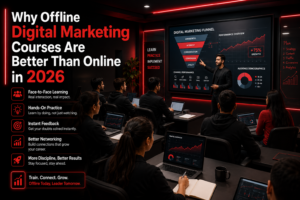
Offline digital marketing courses provide real-world learning and better career outcomes in 2026.
In 2026, digital marketing has become one of the most in-demand skills for students and professionals. While online learning platforms have gained popularity (see more about online learning systems), many learners are now realizing the limitations of virtual education. This has led to a renewed interest in offline digital marketing courses. These classroom-based programs provide structured learning, real-time interaction, and hands-on experience that online courses often lack. If you are serious about building a successful career, understanding why offline digital marketing courses are better than online in 2026 can help you make the right decision and invest your time wisely.
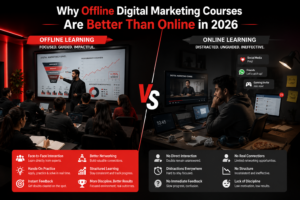
A clear comparison showing why offline learning environments outperform online courses.
Offline digital marketing courses are traditional classroom-based training programs where students learn directly from instructors in a physical environment. These courses are usually conducted in institutes, training centers, or colleges. Unlike online learning, offline courses follow a structured schedule, ensuring discipline and consistency. Students attend lectures, participate in discussions, and work on real-time projects under expert guidance. This setup creates a focused learning atmosphere that helps students grasp complex concepts more effectively. In 2026, as competition grows, this structured and guided approach is becoming more valuable for beginners entering the digital marketing industry. Learn more about career-focused programs at Asmat Institute.
Online courses offer flexibility, but they come with several drawbacks that can hinder effective learning. One major issue is the lack of discipline, as students often procrastinate or skip lessons. Additionally, limited interaction with instructors makes it difficult to clear doubts instantly. Many online courses are pre-recorded, which reduces engagement and personalization. Technical issues, distractions at home, and lack of practical exposure further affect the learning experience. In 2026, when digital marketing requires hands-on skills and real-time problem-solving, these limitations make online courses less effective compared to offline digital marketing courses. More insights on structured learning can be found at HubSpot Marketing Blog.
A structured classroom environment plays a crucial role in effective learning. Offline digital marketing courses provide a distraction-free space where students can focus entirely on their studies. Unlike online learning, where interruptions are common, offline classes maintain a disciplined routine. Being surrounded by like-minded peers also boosts motivation and encourages active participation. Instructors can monitor student progress closely and provide immediate feedback. This environment enhances understanding and retention of concepts. In 2026, when attention spans are shrinking due to digital overload, having a dedicated physical learning space gives offline courses a significant advantage. Many institutes offering such environments are available in Uttam Nagar and Janakpuri.
One of the biggest advantages of offline digital marketing courses is direct interaction with experienced trainers. Students can ask questions instantly, participate in discussions, and receive personalized guidance. This real-time communication helps in clearing doubts quickly and improves overall understanding. Trainers can also adapt their teaching methods based on student needs, which is not possible in most online courses. Face-to-face interaction builds confidence and encourages students to engage more actively. In 2026, where practical knowledge is essential, this direct mentorship plays a key role in shaping skilled digital marketing professionals. Communication and soft skills development are also supported through spoken English training.
Digital marketing is a skill-based field that requires practical experience. Offline digital marketing courses focus heavily on hands-on training, allowing students to work on live projects, campaigns, and tools. Instead of just watching tutorials, students actively implement strategies such as SEO, social media marketing, and paid advertising. This practical exposure helps in building real-world skills and confidence. Trainers guide students step-by-step, ensuring they understand every concept deeply. In 2026, employers are looking for candidates with practical expertise, making offline training programs far more valuable than theoretical online courses. Learn SEO fundamentals from Moz Beginner SEO Guide.
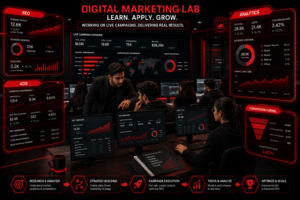
Practical experience is the key advantage of offline digital marketing courses.
Offline digital marketing courses provide excellent networking opportunities that online platforms cannot match. Students interact with peers, trainers, and industry experts in a physical setting, building valuable connections. These relationships can lead to collaborations, job referrals, and career guidance. Being part of a learning community also helps in sharing ideas and gaining different perspectives. Networking plays a crucial role in career growth, especially in a competitive field like digital marketing. In 2026, having a strong professional network can significantly boost your chances of success. Institutes located in Tilak Nagar and Rajouri Garden are popular for such networking environments.
One of the key reasons why offline digital marketing courses are better than online in 2026 is the level of accountability they offer. Regular class schedules, assignments, and assessments keep students on track. Unlike online courses, where learners often lose consistency, offline programs ensure continuous progress. Trainers monitor attendance and performance, motivating students to stay committed. This structured approach helps in developing discipline, which is essential for mastering digital marketing skills. With increasing competition in 2026, maintaining consistency and focus is crucial, and offline learning environments naturally support these qualities.
In offline digital marketing courses, students can get their doubts resolved instantly during lectures or practice sessions. This immediate clarification prevents confusion and helps maintain learning momentum. In contrast, online courses often involve delayed responses through forums or emails, which can slow down progress. Face-to-face communication allows trainers to explain concepts in multiple ways until students fully understand them. This personalized attention significantly improves learning outcomes. In 2026, when digital marketing concepts are becoming more complex, quick and effective doubt resolution gives offline courses a clear advantage.
Offline training institutes provide access to premium tools, software, and resources required for digital marketing. Students get hands-on experience with industry-standard platforms without additional costs. Trainers demonstrate how to use these tools effectively, giving students a competitive edge. In many online courses, learners either don’t get access to such tools or have to pay separately. Practical exposure to tools like analytics platforms, ad managers, and SEO software is essential for real-world applications. In 2026, mastering these tools is a key requirement for digital marketers, making offline courses more beneficial. Explore digital marketing tools overview on Wikipedia Digital Marketing.
Offline digital marketing courses often include placement assistance and career support services. Institutes have dedicated teams that help students with resume building, interview preparation, and job placements. They also have tie-ups with companies, increasing employment opportunities for students. This level of support is rarely available in online courses. Career guidance from experienced professionals helps students choose the right path and achieve their goals faster. In 2026, when competition in the job market is high, having structured placement support can make a significant difference in securing a good job. For admissions and support, visit contact Asmat.
Offline digital marketing courses provide students with real exposure to industry practices through live campaigns and real-time projects. Institutes often collaborate with businesses, allowing students to work on actual marketing challenges. This practical exposure helps learners understand client requirements, campaign strategies, and performance tracking. Unlike online courses, where practice is limited to simulations, offline training ensures real-world experience. Students gain confidence by applying their knowledge in real scenarios. In 2026, employers prefer candidates who have handled live projects, making offline courses a better choice for gaining industry-relevant experience and building a strong portfolio.

Offline learning leads to better skills, confidence, and job opportunities.
Every student has a different learning pace and style, and offline digital marketing courses cater to this through personalized teaching. Trainers can identify individual strengths and weaknesses, providing customized guidance. Students receive one-on-one support during practical sessions, ensuring no one is left behind. This level of personalization is difficult to achieve in online courses, especially in large batches. Face-to-face interaction allows instructors to adjust their teaching methods based on student understanding. In 2026, where skill mastery is essential, personalized learning becomes a key advantage that makes offline courses more effective. Institutes also help students build strong short-term skill modules for faster career growth.
Offline digital marketing courses not only focus on technical knowledge but also help students develop essential soft skills. Regular presentations, group discussions, and classroom interactions improve communication, confidence, and teamwork abilities. These skills are crucial for client handling, presentations, and collaboration in professional environments. Online courses often lack such interactive elements, limiting overall personality development. In 2026, employers look for well-rounded professionals who can communicate ideas effectively. Offline learning environments naturally foster these skills, giving students an added advantage in their careers.
Learning from home can be challenging due to constant distractions such as social media, notifications, and household interruptions. Offline digital marketing courses eliminate these distractions by providing a dedicated learning space. Students can concentrate better and stay engaged throughout the sessions. The structured classroom environment encourages active participation and discipline. This focused approach leads to better understanding and retention of concepts. In 2026, where digital distractions are increasing, having a controlled environment for learning is a major benefit that makes offline courses more effective than online alternatives.
Consider a student who enrolls in an offline digital marketing course with no prior experience. Through structured classes, hands-on projects, and continuous guidance, the student gradually builds strong skills in SEO, social media marketing, and paid ads. Regular feedback from trainers helps improve performance and confidence. Networking with peers and industry experts opens new opportunities. Within months, the student secures an internship and later a full-time job. This real-life scenario highlights how offline learning provides a complete ecosystem for growth, making it more effective than online courses in 2026.
While offline digital marketing courses offer many advantages, online learning still has its place. It can be useful for quick revisions, learning specific tools, or gaining basic knowledge. Working professionals who cannot attend regular classes may also benefit from online flexibility. However, online courses should be seen as a supplement rather than a replacement for offline training. In 2026, combining both methods can provide the best results, but for beginners seeking strong fundamentals and practical skills, offline digital marketing courses remain the better option.
Take the first step toward a successful digital marketing career today.
In conclusion, the debate around why offline digital marketing courses are better than online in 2026 clearly highlights the advantages of classroom-based learning. From structured education and real-time interaction to hands-on experience and networking opportunities, offline courses provide a complete learning ecosystem. They help students build practical skills, gain industry exposure, and develop confidence. While online courses offer flexibility, they often lack the depth and engagement required for mastering digital marketing. For students and beginners aiming for a successful career, investing in offline digital marketing courses is a smart and future-proof decision.